
End-to-end EUDR compliance for timber and biomass supply chains
The only traceability platform specifically designed for timber and biomass enterprises, delivered in partnership with Google and geospatial specialists NGIS
Beyond Basic Certification:
New Standards and Penalties
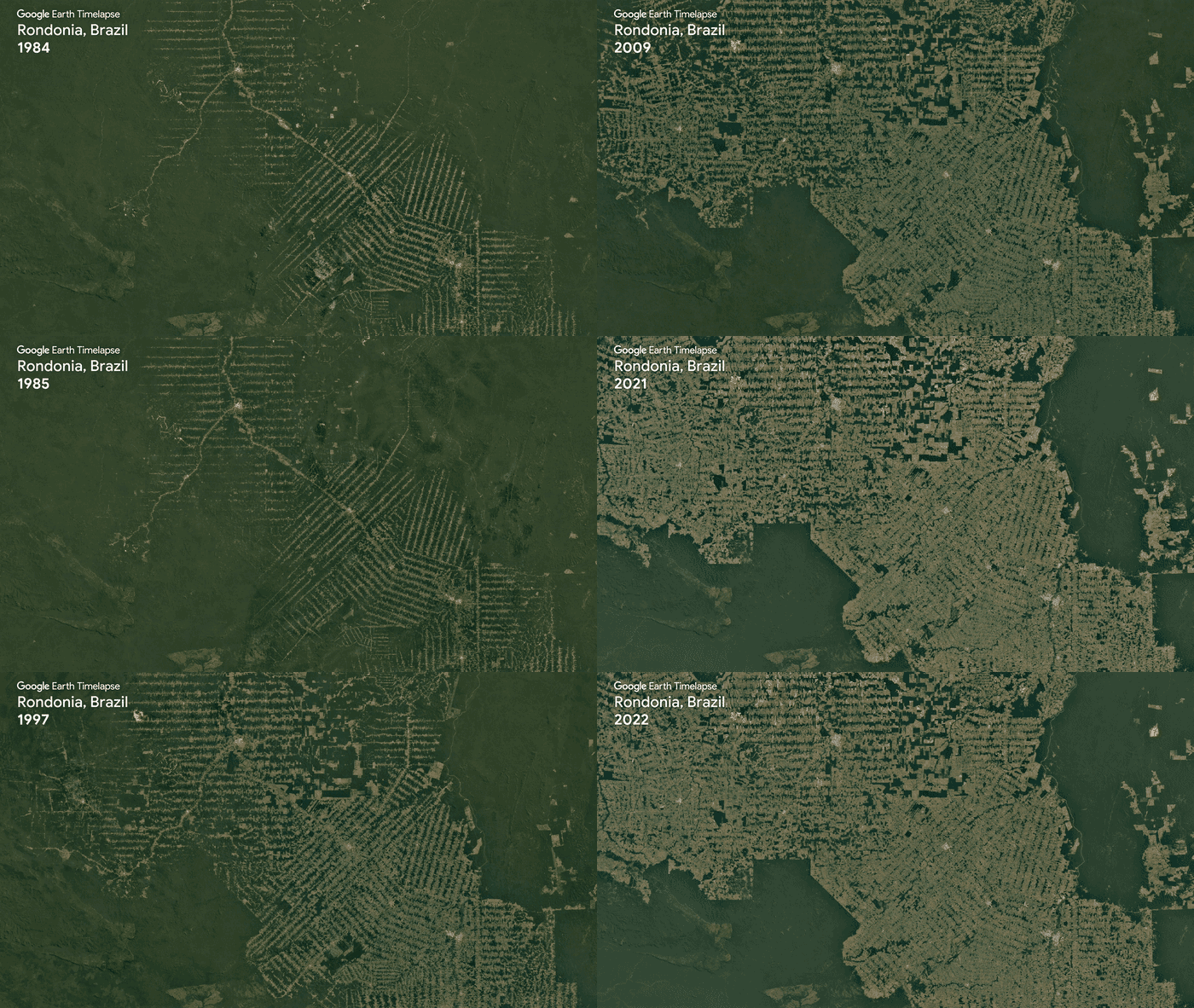
The EUDR mandates a higher degree of supply chain traceability compared to the EU Timber Regulation. The requirement for geolocation data for the land of origin is a significant addition, with EUDR extending into the requirement for a system that provides risk assessment, risk mitigation and due diligence statement management through a new EU information system.
Beyond EUDR, further global traceability regulations are also being developed in the UK and U.S, with others sure to follow. These regulations will require companies to maintain even more comprehensive supply chain documentation.
Companies that aren’t compliant-ready can face serious consequences, such as fines, exclusions from public procurement opportunities, and confiscation of products that can cause significant disruptions to business operations.
The EUDR Compliance Countdown
The deadline for EUDR compliance is coming. Be ready for December 30 2025.
Timber and biomass industries will need to comply with EUDR regulations by the end of the year. Organisations responsible for materials and products in scope for EUDR must implement an EUDR system to deliver due diligence statements by June 2026.
While your organisation may already hold Forest Stewardship Council or Programme for the Endorsement of Forest Certification, this does not necessarily mean you are compliant. Moving forward, it will be a requirement for companies importing into the EU to provide the geolocation of all plots of land where your product is sourced. With timber regularly moving through multiple transformations, from forest to log yard to sawmill to product, often across countries, tracing your supply chain can be challenging and requires specialized geospatial expertise.
Why TraceMark?
Purpose-Built EUDR Solution for Forest Products
TraceMark, developed by global geospatial company NGIS, in partnership with Google, is a supply chain solution designed to deliver an end to end, integrated and automated EUDR system. TraceMark is purpose-built for timber and biomass industry workflows, providing end to end traceability for fibres, including inbound material and finished goods.
By combining your company data, third-party information, and Google’s extensive datasets, TraceMark creates a complete picture of raw material origins and environmental impacts. With auditing workflows and geospatial monitoring capabilities, companies with large and complex supply chains can accelerate the maintenance of accurate supply chain records, as well as assess and mitigate risk.
The NGIS Advantage
NGIS is a global geospatial provider with offices in Europe, North America and Asia and 30 years of experience delivering innovative Geospatial solutions. Our team of software engineers, cloud engineers, data scientists and geospatial specialists have extensive forestry experience and domain knowledge.
Unlike other Software as a Service ESG solutions, when you adopt TraceMark, you will also equip your business with geospatial specialists and the leading cloud geospatial and AI technology from Google. Partner with the TraceMark team to provide the capability to address EUDR as well as future regulations.

Designed for
Complex
Enterprises
Combining holistic workflows, system integration and customer specific deployments
The TraceMark Difference

Built
with
Innovation
Leveraging differentiated technology designed to enable global sustainability solutions

Leading
Geospatial
Expertise
Built and supported by the team at NGIS, a globally leading Geospatial company
Tailored, Flexible
and Future
Proof
Address evolving and new regulations through an open data architecture
EUDR Workflows in TraceMark

Transaction Traceability
TraceMark provides transaction level traceability that will be critical for businesses who will need to confirm specific product placement on the EU market and the detailed supply chain attached to products. The TraceMark data model has been designed to cater for both mass balance and identify preserve chains of custody extending into product, shipment and segregation based traceability.

Due Diligence
Due Diligence Statements can be generated from any point in the supply chain to deliver EU compliant, automated and packaged outputs that include all relevant information. TraceMark produces statements with country of production and packages of geo locations where the products were produced including appropriate Harmonised systems codes and indication of either the absence of risk or only negligible risk identified.

Risk Assessment
Petabytes of data is used from over 100 datasets to provide historical, current and future risk assessment at a global scale. A fully automated platform provides updates of alerts tailored for supply chains and a range of extensible geospatial datasets are used to exclude deforestation that is considered not in scope for EUDR. Framework aligned proactive risk assessment is provided across themes including Biodiversity, Governance, and Climate Change.

Risk Mitigation
Managed workflows that create investigations to enable organizations to quickly identify and take action on potential non-compliance. Investigations automate data-gathering activities with suppliers including request for additional information,evidence and feedback, and comprehensive audit tracking.

Auditing and Checks
Dedicated roles are available for third party auditors to access required data and to leverage the investigation workflows to perform the required checks of due diligence. Through managed workflows for operators, suppliers and auditors TraceMark provides consolidation of content and activities for end to end EUDR compliance.
Geospatial Verifcation
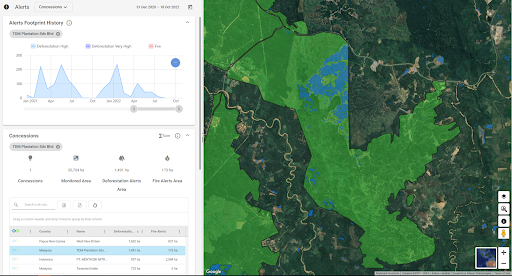
TraceMark is a Google Cloud-native platform that leverages differentiated Google Geospatial technology to provide first mile monitoring using a range of leading satellite imagery programs. An extensible data architecture with AI driven risk analysis provides automated monitoring of supply chain risk including fire alerts, deforestation alerts and land use change analysis.